

Portable Total Hydrocarbon Analyzer vs. VOC Detector: What Is the Difference?
Release time: 2026-09-04
Table of Contents
When choosing equipment for industrial gas detection, a tragbarer Gesamtkohlenwasserstoffanalysator and a VOC detector may look similar at first. Both can be carried into the field, both can be used for emission monitoring, and both may be used around chemical or petrochemical equipment.
However, they are designed around different measurement needs.
A total hydrocarbon analyzer focuses on hydrocarbon concentration, while a VOC detector may be configured for detecting a wider selection of volatile organic compounds depending on its detection technology. This distinction matters when the equipment is being used for leak inspection, environmental monitoring, or LDAR work.
For technicians and purchasing teams, the better question is not simply which instrument is more sensitive. It is what needs to be detected, where it will be detected, and how the measurement data will be used.
Total Hydrocarbon Analyzer and VOC Detector: The Basic Difference
The main difference starts with the measurement target.
A total hydrocarbon analyzer is intended to measure hydrocarbons as a group. This makes it useful when the inspection involves methane and other hydrocarbons rather than one specific compound.
A VOC detector, on the other hand, is generally used to identify or measure volatile organic compounds. Its actual detection range depends on the sensor technology and configuration.
This difference can affect equipment selection considerably. For example, an instrument intended for general VOC screening may not provide the same coverage as an FID-based analyzer when the inspection involves light hydrocarbons.
| Factor | Total Hydrocarbon Analyzer | VOC Detector |
| Primary measurement | Total hydrocarbons | Volatile organic compounds |
| Common detection technology | FID | FID, PID, or other sensor technologies |
| Methane detection | Supported by FID-based systems | Depends on detection technology |
| Field inspection | Suitable | Suitable |
| LDAR applications | Highly suitable | Suitable depending on target compounds |
| Main consideration | Hydrocarbon concentration | Target VOCs and sensor response |
The table shows why these two terms should not automatically be treated as interchangeable.
Why Detection Technology Matters
The detector inside the instrument determines what the analyzer can actually measure.
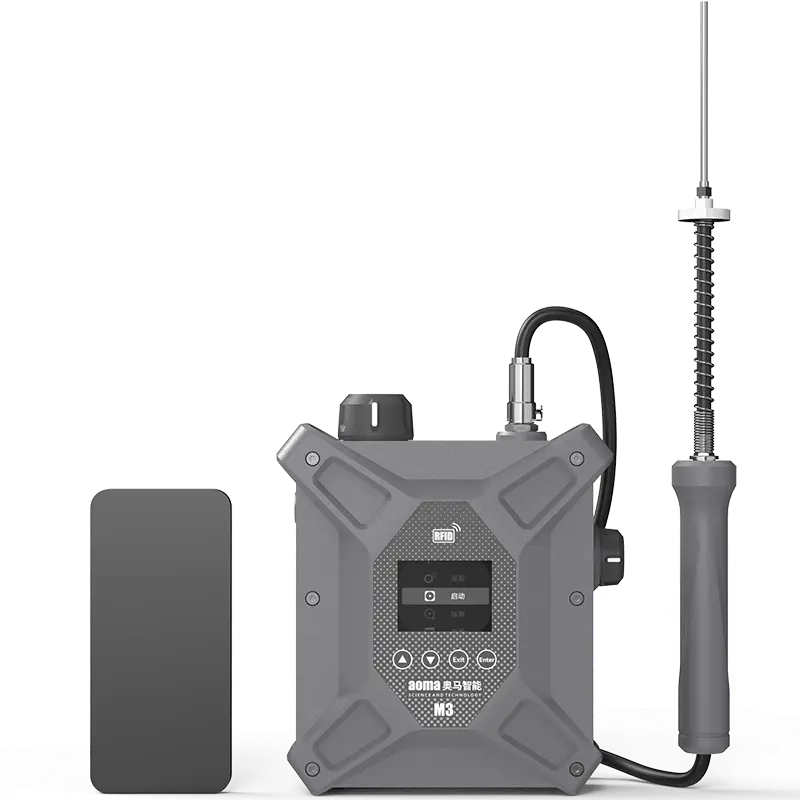
A Flame Ionization Detector (FID) is particularly useful for hydrocarbon measurement. The M3 from Aoma, for example, uses a miniature FID and is designed for field detection of hydrocarbons, methane, and VOC emissions. Its FID measurement range is adjustable from 0 to 50,000 μmol/mol methane, with a stated detection limit of 0.5 ppm methane.
This type of detection is useful when an inspection team needs more than a simple indication that organic vapors are present. The concentration reading can be used to locate emission points and assess changes during inspection and maintenance.
Some Aoma instruments can also be configured with additional sensors. The M3 supports optional PID, oxygen, carbon monoxide, sulfur dioxide, and hydrogen sulfide sensors, allowing the same instrument platform to cover additional monitoring requirements.
This is one reason it is important to look at the actual detector configuration rather than choosing equipment based only on the product name.
When Is a Portable Total Hydrocarbon Analyzer a Better Choice?
A tragbarer Gesamtkohlenwasserstoffanalysator is particularly useful when field technicians need to measure hydrocarbons across many inspection points.
Consider a petrochemical facility with valves, pumps, flanges, connectors, storage equipment, and pipelines. Technicians may need to move from one location to another and check for fugitive emissions throughout the facility.
In this situation, the instrument needs to provide several things at the same time:
- Fast response
- Suitable detection sensitivity
- Stable sampling
- A practical measurement range
- Easy field operation
- Sufficient battery life
- Protection for industrial environments
- Hazardous-area certification where required
The M3 is designed specifically around this type of field use. According to its product information, the instrument weighs approximately 1.25 kg including the battery and gas cylinder, uses a color LCD display, supports USB, Bluetooth and Wi-Fi, and provides a response time of less than 3 seconds under the specified test condition.
For an inspection team, these details are more meaningful than simply knowing that the device is “portable.”
Handheld and Portable: Is There a Difference?
The terms handheld Und portable are often used together, but they can describe slightly different design priorities.
A handheld portable total hydrocarbon analyzer is intended to be carried and operated directly by the technician. Weight, balance, controls, display visibility, battery replacement, and sampling probe design therefore become important.
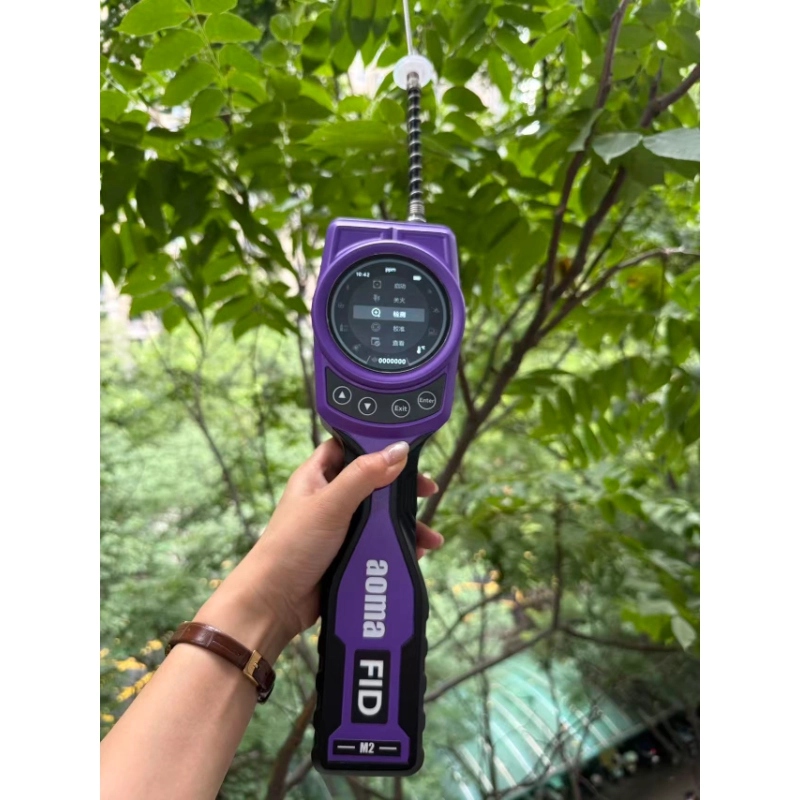
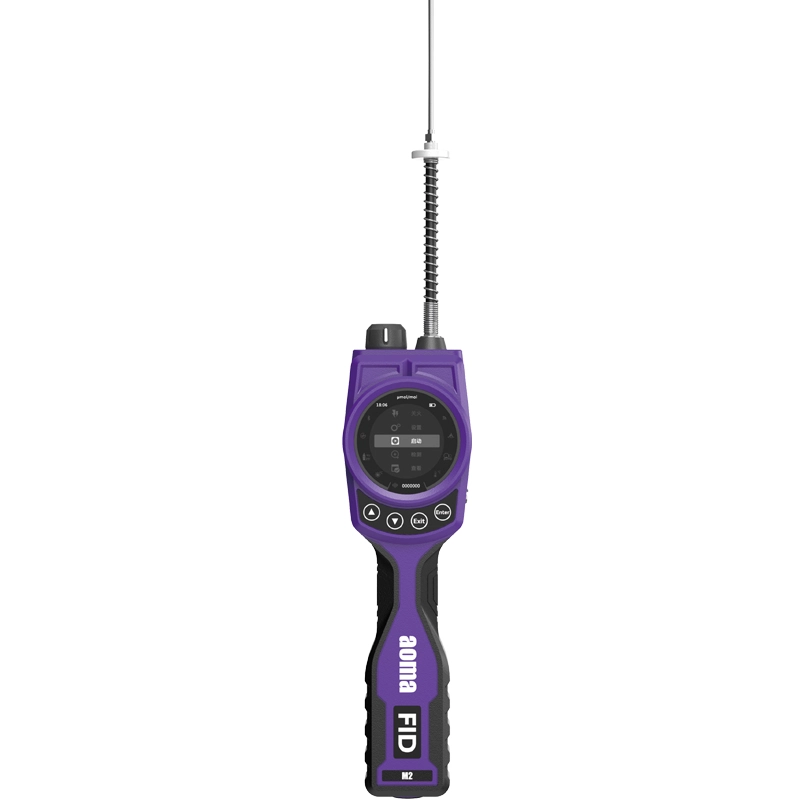
For example, Aoma’s product range includes both handheld and portable total hydrocarbon analyzers. The M2 is listed as a handheld FID total hydrocarbon analyzer, while the X5 is described as a portable total hydrocarbon analyzer/volatile organic compounds analyzer.
The distinction is useful when selecting equipment for different inspection routines. A technician carrying an analyzer throughout a plant may prioritize low weight and easy operation, while another application may place greater emphasis on measurement functions, data management, or additional sensors.
What Makes a Portable Analyzer Useful for LDAR?
LDAR inspection is not simply about finding a gas leak once.
Technicians need to inspect potential emission points systematically, record measurements, identify locations that require attention, and verify whether emissions have been reduced after maintenance.
This makes the analyzer’s field performance important.
Aoma’s M3 is specifically designed for LDAR detection and supports applications across petroleum and natural gas operations as well as chemical, pharmaceutical, coating, printing, and packaging industries.
The instrument also supports data storage and communication through USB, Bluetooth, and Wi-Fi. Its compatible LDAR management software and cloud platform are designed to help with data uploading, organization, storage, and management.
For facilities carrying out regular inspections, this can help connect the measurement process with subsequent record keeping instead of treating each reading as an isolated result.
Portable VOC Analyzer for LDAR and Leak Detection
A portable VOC analyzer for LDAR & Leak Detection needs to do more than provide a convenient portable format.
Field conditions can vary considerably. Equipment may be used outdoors, inside production areas, around storage tanks, or near process equipment. Temperature, humidity, sampling pressure, dust, and the presence of flammable gases can all affect equipment selection.
The M3 is specified for an operating temperature range of -25°C to +50°C and an IP66 enclosure protection rating. It also carries an Ex db ia IIC T4 Gb hazardous-location certification.
The instrument uses low-pressure solid-state hydrogen storage for its FID system rather than relying on a conventional high-pressure hydrogen cylinder. The manufacturer specifies continuous operation of approximately 20 hours for the hydrogen storage system under the stated conditions.
These design choices are especially relevant to technicians who need to carry the equipment around an industrial site.
Comparing Measurement Performance
When comparing a total hydrocarbon analyzer with a VOC detector, measurement performance deserves more attention than the name printed on the instrument.
Several specifications are worth checking before purchase.
| Specification | Why It Matters |
| Detection limit | Determines how well low-concentration emissions can be identified |
| Measurement range | Shows whether the instrument can handle the expected concentration levels |
| Response time | Affects the speed of point-to-point inspection |
| Wiederholbarkeit | Helps maintain consistent measurements |
| Sampling flow | Influences sampling stability and response |
| Calibration | Determines how easily measurement accuracy can be maintained |
| Data storage | Useful for inspection records and traceability |
| Battery life | Important for long field inspections |
| Gewicht | Affects operator comfort and mobility |
| Protection rating | Relevant to outdoor and industrial environments |
| Hazardous-area certification | Important for applicable explosive atmospheres |
The M3, for example, has a stated FID resolution of 0.01 μmol/mol, FID detection limit of 0.5 ppm methane, response time below 3 seconds under the specified condition, and a nominal sampling flow of 0.7 L/min.
These specifications should always be considered together. A wide measurement range is useful, but it does not replace the need for an appropriate detection limit. Likewise, a fast response is valuable in field inspection, but only if sampling and measurement remain stable.
Which One Should You Choose?
The answer depends on the inspection objective.
If the main requirement is broad hydrocarbon measurement, particularly where methane and other hydrocarbons need to be detected, an FID-based total hydrocarbon analyzer is a strong option.
If the main requirement is VOC screening, the appropriate detector depends on the compounds being monitored and the sensing technology used by the instrument.
For LDAR work, the selection should also include practical factors such as portability, response time, detection range, hazardous-area certification, data recording, and battery life.
In other words, the best equipment is not necessarily the instrument with the largest specification on paper. It is the one whose detection technology and field design match the actual inspection task.
Aoma’s Approach to Portable Gas Detection
Anhui Aoma Intelligent Technology Co., Ltd. focuses on the design, development, production, marketing, and promotion of gas sensor technologies. The company states that its work centers on accurate, reliable, efficient, and cost-effective FID gas sensor technologies for sectors including industrial manufacturing, energy development, environmental protection, public safety, and healthcare.
Its portable analyzer range includes products such as the M2, M3, X5, OM3000, and OM3500, covering different requirements for total hydrocarbon and VOC detection.
This product range allows users to consider the required detection function, portability, operating environment, and data-management needs when selecting an analyzer rather than relying on a one-size-fits-all configuration.
Häufig gestellte Fragen
1. Is a total hydrocarbon analyzer the same as a VOC detector?
No. The two can have overlapping applications, but they are not necessarily the same. A total hydrocarbon analyzer focuses on hydrocarbon measurement, while a VOC detector is generally intended for volatile organic compound detection. The actual capability depends on the detector technology and configuration.
2. Can an FID-based analyzer detect methane?
Yes. The Aoma M3 uses FID technology and lists methane among its detectable hydrocarbons. Its specified FID range is 0–50,000 μmol/mol methane.
3. Why is portability important for LDAR?
LDAR technicians often inspect many potential emission points across large industrial facilities. A lighter, field-oriented analyzer can make it easier to move between locations and complete inspections efficiently.
4. What should I check before purchasing a portable total hydrocarbon analyzer?
Pay attention to the detector type, detection limit, measurement range, response time, repeatability, sampling system, battery life, weight, environmental protection, hazardous-area certification, calibration method, and data-management functions.
5. Can one analyzer detect different types of gases?
Some models support additional detector configurations. For example, the M3 can be equipped with optional PID, oxygen, carbon monoxide, sulfur dioxide, and hydrogen sulfide sensors in addition to its FID system.
Abschluss
A total hydrocarbon analyzer and a VOC detector may be used in similar industrial environments, but they should not be selected for the same reason.
A tragbarer Gesamtkohlenwasserstoffanalysator is a better fit when broad hydrocarbon measurement and field leak inspection are the main requirements. A handheld portable total hydrocarbon analyzer places additional emphasis on mobility and direct field operation, while a portable VOC analyzer for LDAR & Leak Detection is most useful when VOC monitoring and systematic leak inspection are central to the application.
The right choice starts with the gases that need to be measured and the conditions in which the instrument will be used. From there, detection technology, measurement performance, portability, safety certification, and data management can be compared to find the configuration that fits the job.