

China’s LDAR Industry Faces a Major Shift: VOC Emission Controls Drive Demand for Advanced Detection Technology
Release time: 2026-10-08
Table of Contents
Summary
The removal of CMA accreditation requirements for LDAR testing may appear to lower market entry barriers, but it also places greater responsibility on industrial operators. With changes to China’s environmental regulatory framework and the anticipated introduction of VOC emission taxation in 2027, the industry is moving away from low-cost, report-driven services toward accurate measurement, continuous leak management, and reliable emission data. Third-party service providers and instrument manufacturers alike will need to adapt.
China’s LDAR Industry Enters a New Phase
Leak Detection and Repair (LDAR) has been a central part of China’s industrial VOC emission control strategy for approximately 15 years. Initially introduced in the petrochemical sector, LDAR gradually expanded and became a key compliance requirement across a wider range of industries during China’s 14th Five-Year Plan period.
Chemical plants often contain complex piping networks and thousands of static and dynamic sealing points. Identifying and measuring fugitive emissions across these facilities requires substantial fieldwork. Under applicable monitoring requirements, enterprises may need to conduct periodic inspections of relevant equipment components and maintain complete inspection records. This demand has supported the growth of third-party LDAR service providers, which typically perform field measurements while facility operators arrange repairs based on the findings.
However, rapid market expansion has also exposed weaknesses in the traditional service model. Some facilities have prioritized obtaining inspection reports over addressing the leaks identified during testing. Intense price competition has encouraged superficial inspections, while concerns about unreliable measurements and falsified data have undermined confidence in parts of the market.
These challenges have made fugitive VOC emission control a persistent concern for environmental regulators.
Stronger Regulatory Pressure Places Greater Responsibility on Enterprises
As China’s environmental regulatory framework evolves, chemical manufacturers and other industrial operators face increasing pressure to demonstrate that their emission control measures are effective in practice, not merely documented on paper.
Environmental enforcement and compliance risks
Under applicable air pollution control requirements and LDAR-related rules, failures such as missed inspections, overdue testing, omitted equipment components, falsified records, or delayed leak repairs may lead to regulatory penalties and corrective actions.
Environmental enforcement increasingly emphasizes on-site verification and the consistency of monitoring records with actual operating conditions. A compliant report alone cannot compensate for incomplete inspections or unresolved leaks.
For industrial operators, this means that inspection quality, data integrity, and timely maintenance must become integral parts of everyday environmental management.
The anticipated impact of VOC emission taxation
The source article identifies January 1, 2027, as the anticipated start date for broader VOC taxation, with particular attention to fugitive emissions. If implemented as described, such a policy could make emission control more directly relevant to operating costs.
Leakage would no longer be viewed solely as a monitoring issue. It could also affect the cost of environmental compliance and the financial performance of industrial facilities.
Under these circumstances, enterprises have stronger incentives to improve inspection frequency, accelerate responses to suspected leaks, and obtain reliable measurement data. The objective is shifting from producing a report at the end of a monitoring cycle to actively identifying, quantifying, and reducing emissions throughout the year.
Regulatory note: The precise legal basis, effective date, tax scope, and applicability of any proposed VOC taxation should be confirmed against official Chinese government publications before this article is published.
Policy Changes Could Reshape the LDAR Service Market
The evolving environmental policy landscape, including developments involving China’s environmental legislation and environmental monitoring regulations, is expected to influence how LDAR services are delivered and evaluated.
The reported removal of CMA accreditation requirements for LDAR testing is another important development. Although reduced formal entry requirements may allow more service providers to enter the market, they do not eliminate the need for reliable measurements or effective emission control.
Instead, responsibility for environmental compliance remains with the regulated enterprise. Industrial operators will therefore have stronger reasons to assess service providers based on technical competence, data reliability, field response capability, and the quality of their leak repair support.
Two implementation models for industrial LDAR programs
Enterprises generally have two practical approaches to organizing LDAR work.
1. Establish an in-house LDAR team
Companies can build internal inspection teams to conduct routine leak surveys, monitor equipment conditions, and coordinate corrective actions. This approach provides greater direct control over inspection schedules and day-to-day leak management, although it requires investment in equipment, personnel, training, and data management.
2. Continue working with third-party service providers
Enterprises can outsource field inspections to qualified service providers while purchasing their own instruments for spot checks, verification, and internal supervision. This hybrid approach can help companies maintain independent oversight instead of relying exclusively on reports supplied by contractors.
The traditional model often concentrates inspections into a short period near the end of each quarter, leaving longer intervals between surveys. A more effective approach combines scheduled LDAR inspections with routine screening and follow-up measurements, helping operators identify problems sooner and reduce gaps in leak management.
How Third-Party LDAR Service Providers Can Stay Competitive
As enterprises take greater ownership of environmental compliance, the competitive basis of the LDAR service market is likely to change.
From basic testing to integrated leak management
Service providers will need to offer more than data collection and report preparation. Their value will increasingly depend on their ability to investigate leak sources, assess findings, recommend corrective measures, and support repair activities.
Providers that combine reliable inspection with practical leak management can offer a more complete service than those competing primarily on price.
Faster response through local service networks
Industrial facilities may need additional measurements, urgent investigations, or verification after repairs between scheduled inspections. Local service teams can respond more quickly and provide better continuity than a model based entirely on large, geographically dispersed projects.
Regional expertise and rapid field support may therefore become important competitive advantages, particularly in chemical industrial parks.
Greater emphasis on data quality and technical capability
As customers scrutinize inspection results more closely, service providers will need dependable instruments, trained technicians, documented procedures, and traceable data. Low-cost operations that compromise measurement quality are unlikely to provide sustainable value in a market increasingly focused on accountability.
Why LDAR Instruments Need to Evolve
The development of China’s LDAR industry has been accompanied by continuous improvements in VOC detection technology. Equipment that was once considered adequate for basic inspections may no longer meet the practical demands of frequent testing, reliable quantification, and traceable records.
Industrial operators increasingly need instruments that can support both routine screening and formal monitoring workflows.
Four capabilities deserve particular attention when selecting LDAR equipment.
1. Accurate measurement across the working range
An instrument should deliver reliable measurements across the concentrations relevant to its intended application. Low-concentration leaks must not be overlooked, while high-concentration measurements must remain meaningful and stable. Calibration practices, measurement range, and performance verification should all be considered during equipment selection.
2. Stability under demanding field conditions
Chemical plants may involve high temperatures, dust, mixed gas environments, and extended inspection periods. Instruments intended for such settings should be suitable for the operating environment and maintain dependable performance throughout fieldwork.
3. Traceable data and intelligent functions
Data storage, wireless transmission, alarm functions, calibration support, and audit trails can help improve inspection management. Where required, integration with an LDAR management platform can link equipment records, measurements, supporting evidence, and repair follow-up.
These functions make it easier to review inspection history, verify results, and prepare documentation for internal or regulatory assessment.
4. Detection technology appropriate to the measurement task
Flame Ionization Detection (FID) is widely used for hydrocarbon measurement in LDAR applications. Photoionization Detection (PID) can be useful for screening certain VOCs, but it should not automatically be treated as a substitute for an FID-based method when applicable regulations or procedures specify a particular measurement approach.
Instrument selection should follow the relevant standards, target compounds, measurement objectives, and site requirements.
AoMa Intelligent Technology’s Coordinated LDAR Solution: Screen, Inspect, and Verify
To address different field monitoring requirements, AoMa Intelligent Technology offers a coordinated approach that combines broad-area screening, routine point checks, and detailed LDAR measurements.
Rather than relying exclusively on point-by-point inspections, this approach assigns different tasks to complementary instruments. Suspected leaks can be screened efficiently, checked in the field, and then assessed through more detailed measurements where appropriate.
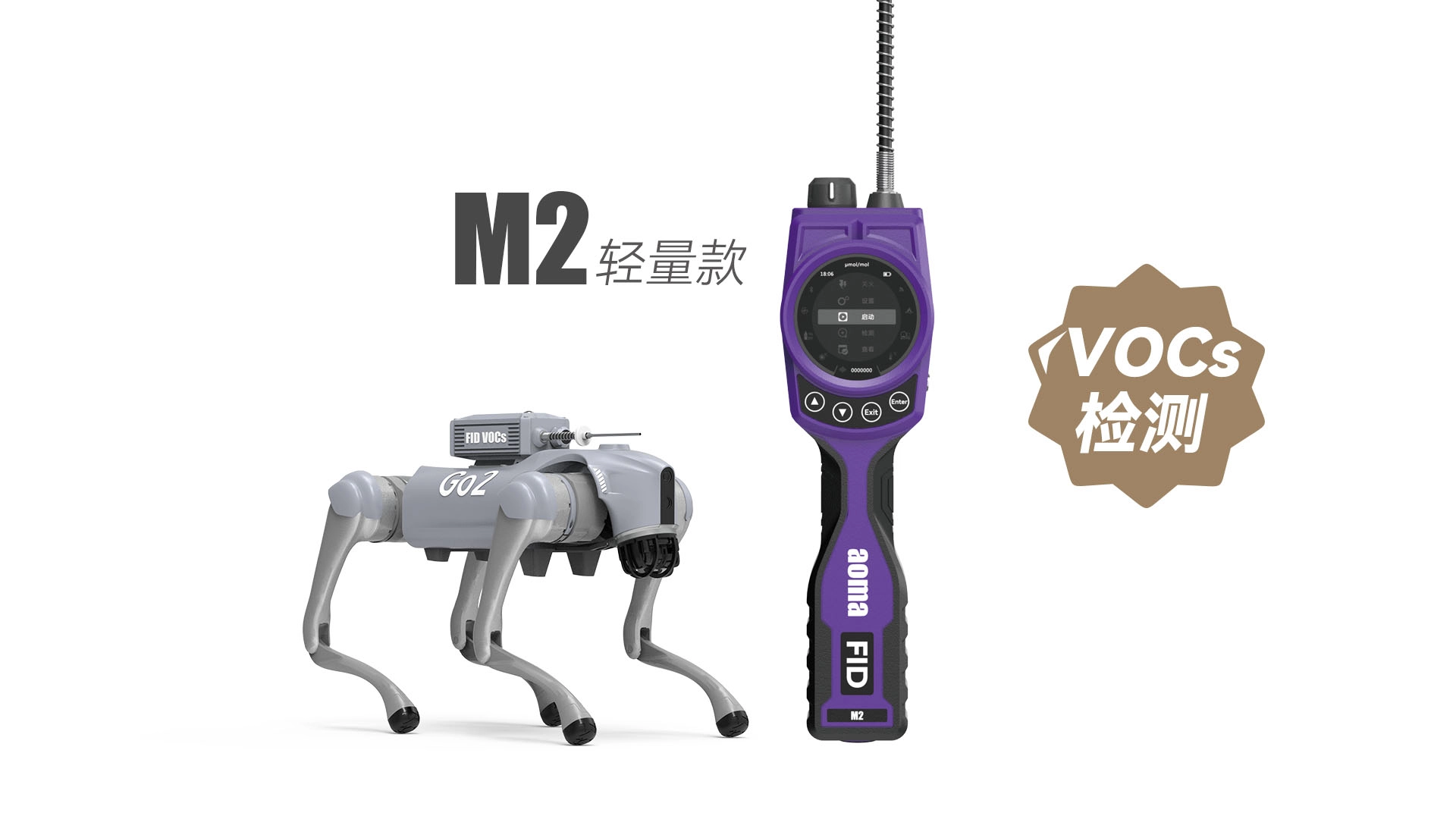
M2 Handheld FID VOC Analyzer for Routine Inspections
The M2 is designed for routine field checks and point-level VOC screening.
Key specifications and features described by AoMa include:
- A handheld design with a stated weight of approximately 900 g
- A measurement range of 0–50,000 ppm
- ppb-level measurement capability, as specified by the manufacturer
- One-touch automatic calibration
- A low-pressure solid-state hydrogen supply design
Application value: Its portable form factor supports routine inspections and quick checks at suspected leak points. This can help plant personnel identify potential issues earlier and conduct internal LDAR screening more conveniently.
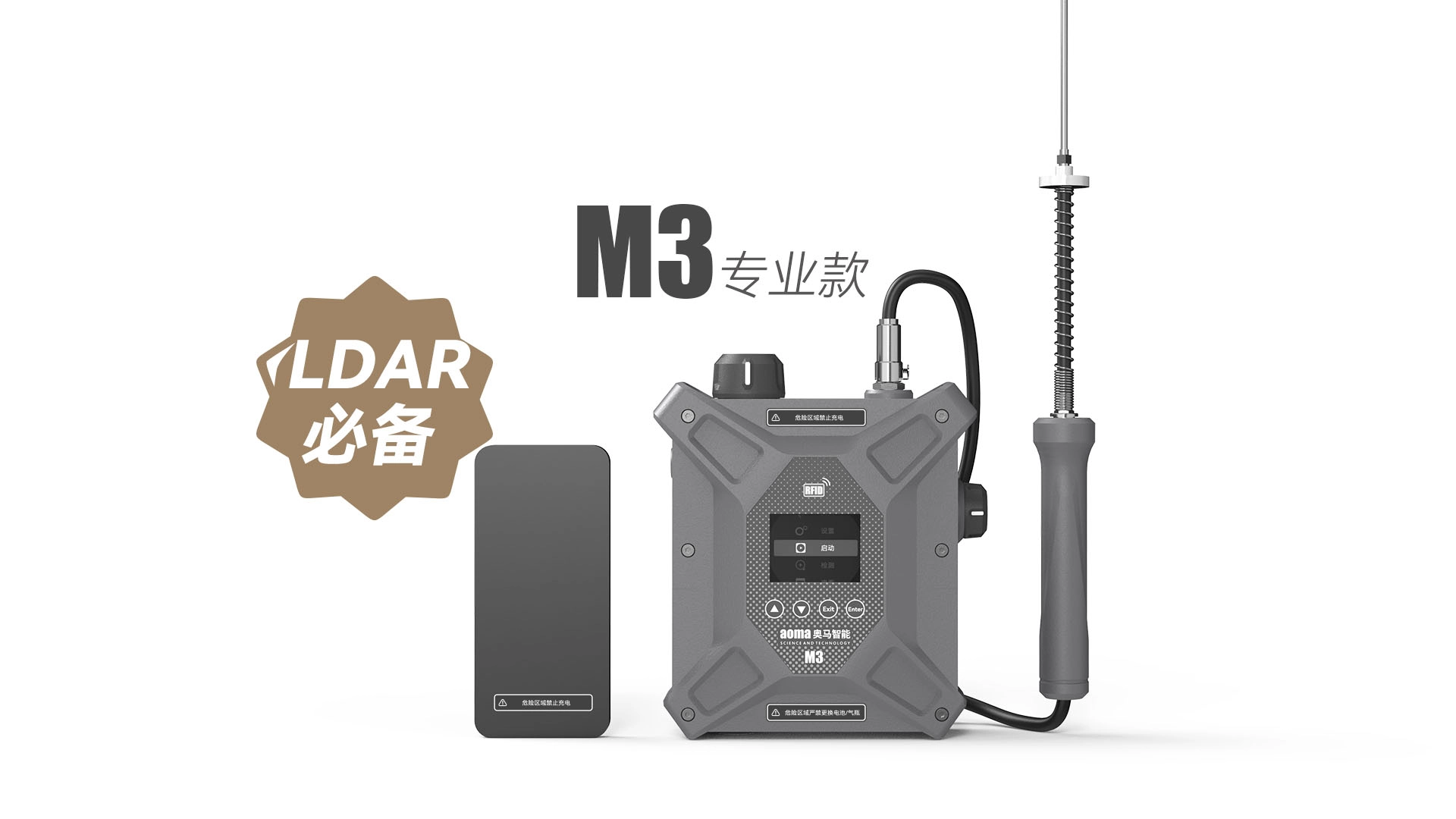
M3 Portable FID VOC Analyzer for Periodic LDAR Inspections
The M3 is intended for more comprehensive LDAR inspections and detailed measurements across equipment components.
Its stated features include:
- A lightweight design of approximately 1.5 kg
- Real-time correlation between instrument operating status and measurement data
- Support for traceable inspection records
- Portability suited to systematic field surveys
AoMa also offers an LDAR management platform designed to support equipment records, emission calculations, links to sampling videos, and operating-log exports.
Application value: Combining field measurements with organized data management helps enterprises maintain more complete inspection records and review results more effectively.
Handheld Infrared Imaging Leak Detector for Broad-Area Screening
Infrared gas imaging provides a different way to investigate potential leaks. Instead of measuring only at individual equipment points, an infrared imaging instrument can visualize gas plumes under suitable operating and environmental conditions.
AoMa describes its handheld infrared imaging leak detector as supporting:
- Non-contact screening across broader areas
- Visual identification of suspected gas plumes
- A stated minimum observation distance of 0.2 m
- Supplementary screening alongside FID-based measurements
Application value: Infrared imaging can help teams identify areas that warrant closer inspection, including locations where direct access is difficult or a stand-off observation approach is preferable. Suspected leaks can then be evaluated using an appropriate measurement instrument.
Actual detection performance depends on the target gas, environmental conditions, equipment configuration, and operator procedures.
A Three-Level Workflow for More Effective Leak Management
AoMa’s coordinated approach assigns distinct roles to the three technologies:
- Infrared imaging: broad-area screening. Identify areas where suspected gas releases may be occurring.
- M2: routine point checks. Investigate suspected locations and support day-to-day screening.
- M3: detailed LDAR measurements. Conduct systematic component-level inspections and maintain measurement records.
A typical workflow begins with infrared screening to identify suspected leaks. Technicians then use the M2 to investigate selected points and determine which locations require further attention. During scheduled LDAR inspections, the M3 can be used for detailed measurements in accordance with the applicable procedure.
This division of responsibilities helps balance inspection speed, routine coverage, and measurement detail. It can also support more timely leak investigation between scheduled surveys.
When combined with an appropriate repair process and reliable data management, coordinated screening and measurement can help enterprises improve leak visibility, prioritize corrective work, and better understand their VOC emissions.
Moving Beyond Reports Toward Continuous Emission Control
The future of LDAR will depend on more than the number of inspections performed or reports generated. Industrial operators need to know where leaks occur, how significant they are, whether repairs are effective, and whether the problem returns.
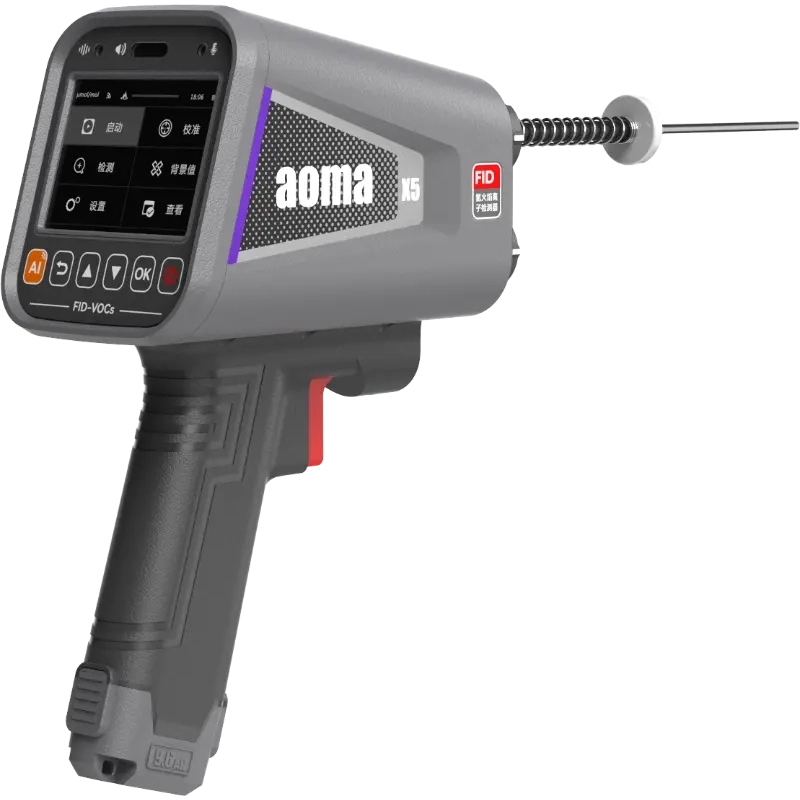
AoMa Intelligent Technology provides gas analysis instruments and coordinated monitoring solutions for industrial VOC detection. Its M2 handheld FID analyzer, M3 portable FID analyzer, infrared imaging equipment, and supporting LDAR management platform are designed to address different stages of leak screening and inspection.
By combining suitable detection technologies with regular inspections, traceable data, and timely corrective action, enterprises can build a more practical and responsive approach to fugitive emission management.
For industrial facilities and LDAR service providers preparing for increasingly demanding monitoring requirements, selecting instruments according to the actual measurement task is an important step toward more reliable environmental management.
Frequently Asked Questions
What does LDAR stand for?
LDAR stands for Leak Detection and Repair. It is a structured approach to identifying leaks from equipment components, measuring emissions where required, and ensuring that detected leaks are addressed through appropriate corrective action.
Why is routine LDAR screening important between scheduled inspections?
Routine screening can help identify suspected leaks that develop between scheduled surveys. When combined with appropriate follow-up measurements and repairs, it reduces dependence on periodic inspections alone and supports more continuous leak management.
What is the difference between FID and infrared gas imaging?
FID instruments measure hydrocarbon concentrations in a sampled gas stream and are commonly used for component-level LDAR measurements. Infrared gas imaging can visualize certain gas plumes from a distance under suitable conditions, making it useful for broad-area screening. The two technologies serve different purposes and can complement one another.
Can PID replace FID in LDAR inspections?
Not automatically. PID and FID technologies respond differently to different compounds and serve different measurement purposes. Whether a particular instrument is acceptable depends on the applicable regulation, standard, target compounds, and inspection procedure. Where an FID-based method is required, a PID screening result should not be assumed to satisfy that requirement.
What should enterprises consider when selecting an LDAR analyzer?
Important considerations include measurement range, sensitivity, accuracy, calibration, stability, environmental suitability, data traceability, ease of field operation, and compatibility with applicable monitoring procedures. The instrument should be selected according to the actual inspection task rather than price alone.
How can an LDAR management platform improve inspection workflows?
A suitable platform can organize equipment records, inspection results, supporting evidence, operating logs, and follow-up actions. This makes it easier to review inspection history, track outstanding repairs, and prepare documentation for internal management or regulatory review
Editorial note for publication: Regulatory statements concerning CMA accreditation, the implementation of China’s environmental legislation, and the proposed January 1, 2027 VOC taxation date should be verified against authoritative government sources before publication. Product specifications should also be checked against the latest official AoMa documentation.