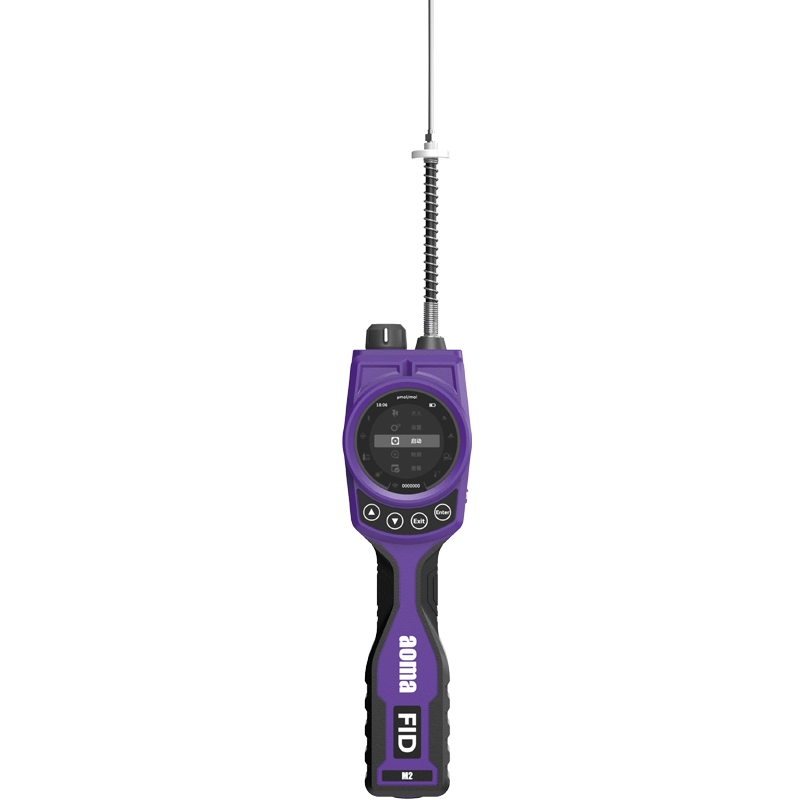
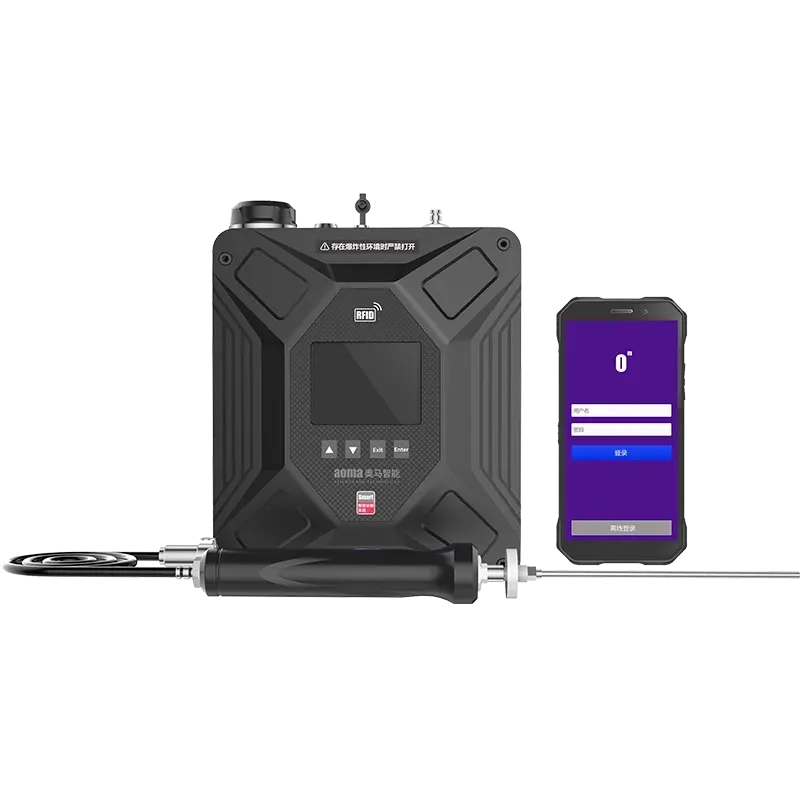
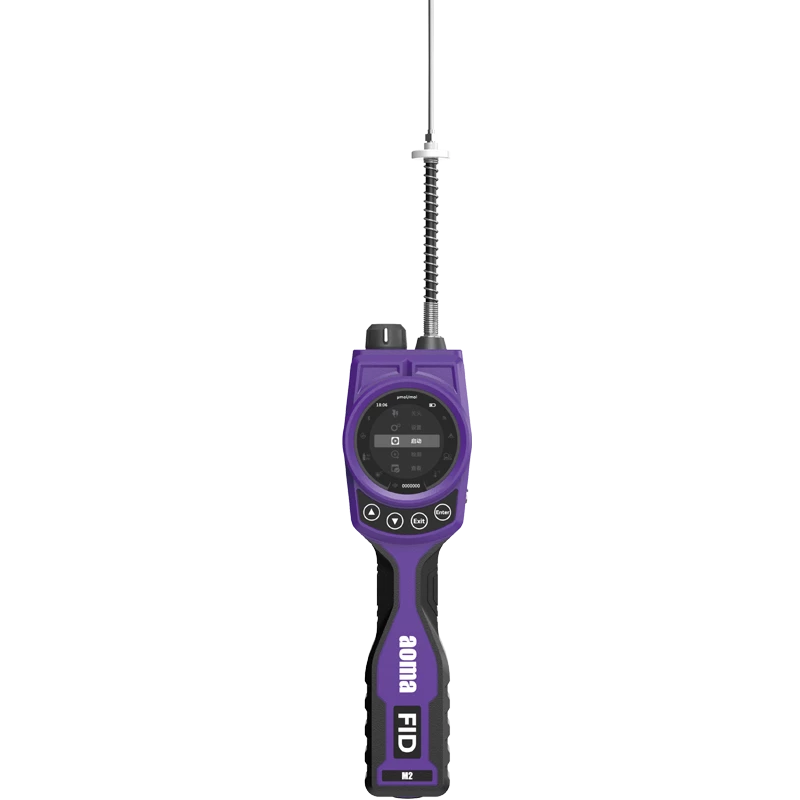
جهاز تحليل الهيدروكربونات الكلي المحمول باليد Aoma M2 FID
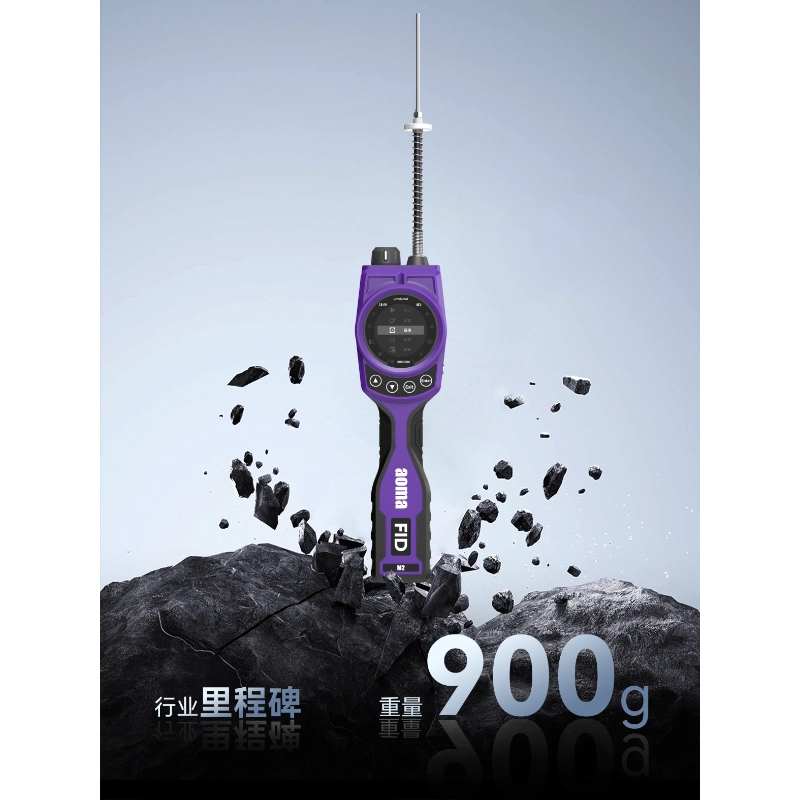
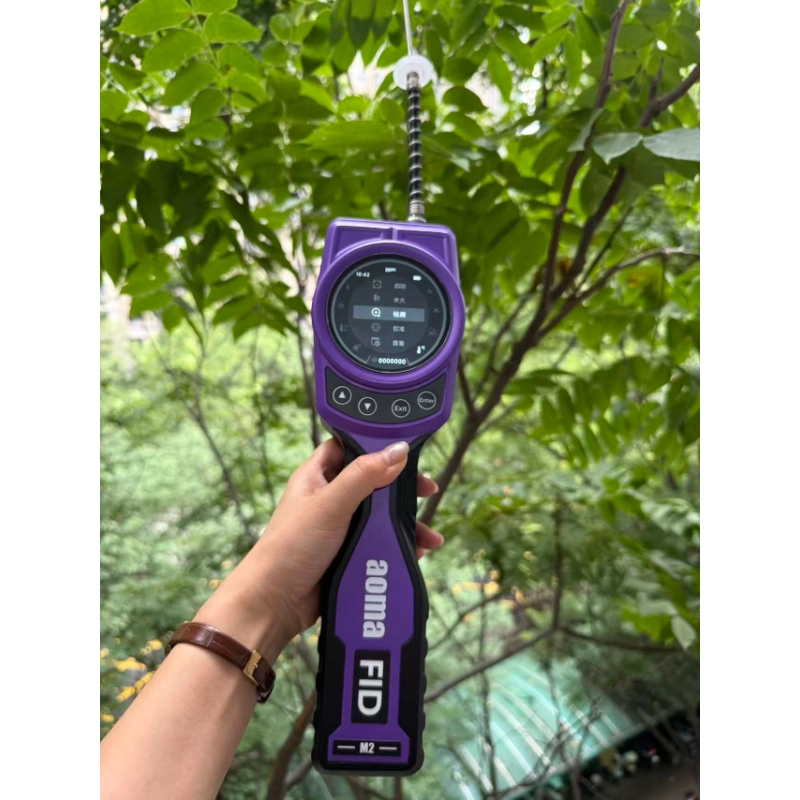
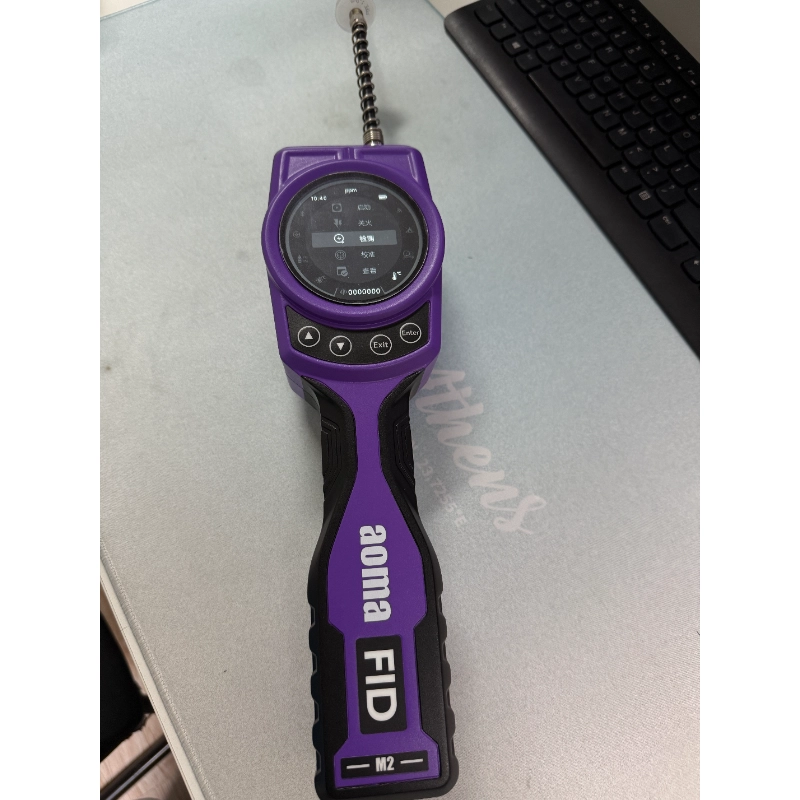
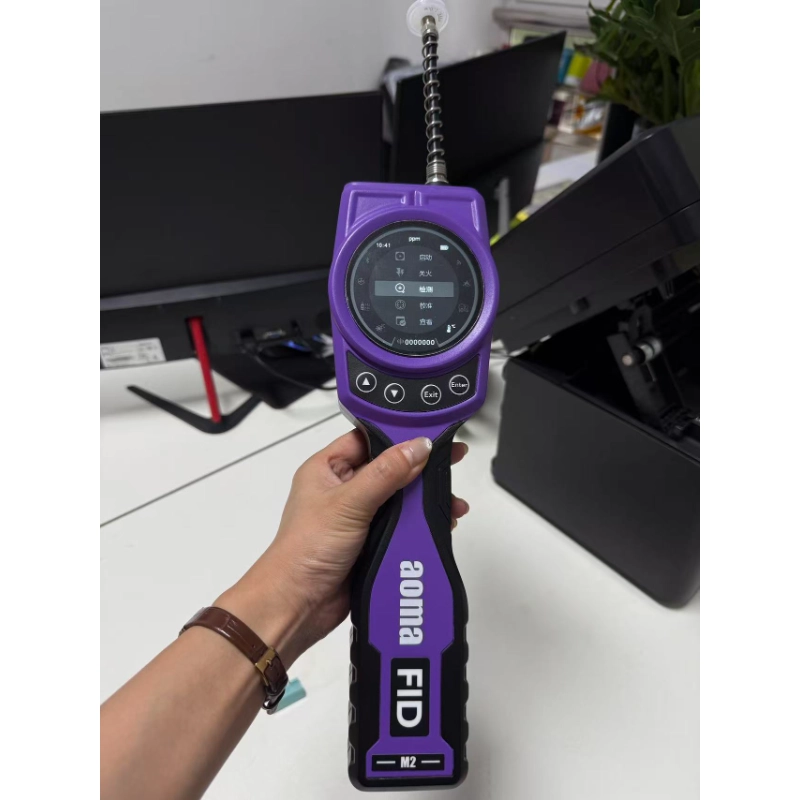
The Aoma M2 is an ultra-lightweight analyzer weighing only 0.9 kg. It supports one-handed operation and features a core miniature FID sensor technology, enabling wide-range coverage down to ppb levels. Equipped with a DBC automatic control system, it maintains stable output even in complex environments.
The Aoma M2 is an ultra-lightweight analyzer weighing only 0.9 kg. It supports one-handed operation and features a core miniature FID sensor technology, enabling wide-range coverage down to ppb levels. Equipped with a DBC automatic control system, it maintains stable output even in complex environments.
1. Overview
FID – Flame Ionization Detector. This instrument oxidizes organic matter in the measured sample into an ion stream through a flame produced by the combustion of hydrogen and air. This ion stream passes through a high-impedance amplifier to become a current signal proportional to the amount of organic compounds entering the flame, thereby enabling quantitative analysis of organic compounds based on the magnitude of the current signal.
2. Detection Principle
Carbon-containing organic compounds undergo chemical ionization when burned in a hydrogen flame (~200°C). The generated ions form a micro-current signal under the action of an electric field.
Ionization Reaction Process:
CH + O → CHO⁺ + e⁻
3. Schematic Diagram of Operating Principle
4. Performance Characteristics
4.1. Extremely Fast Response Speed: The instrument can react to changes in gas concentration within seconds, making it highly suitable for rapid screening and continuous monitoring of large on-site areas.
4.2. Wide Linear Range and High Precision: Utilizing classic FID detection principles, it maintains excellent linearity and high sensitivity across a very wide concentration range (from ppm level to percentage level), ensuring accurate and reliable readings.
4.3. Good Consistency in Response Factors for Total Hydrocarbons: Compared to PID (Photoionization) technology, FID has a more balanced and universal response to hydrocarbons (especially alkanes), making it the “Gold Standard” for detecting “Total Carbon” or “Total Hydrocarbons.”
4.4. Compliance with National Environmental Standards and Regulations: Fully complies with China’s “Technical Requirements and Detection Methods for Portable Total Hydrocarbon, Methane, and Non-Methane Total Hydrocarbon Monitors for Ambient Air and Exhaust Gas” (HJ 1012-2018) and US EPA Method 21 standards. Data can be directly used for official law enforcement and compliance reporting.
5. Scope of Application
Detectable: Almost all organic compounds (Hydrocarbons, Alcohols, Ketones, Aldehydes, Esters, Ethers, Benzenes, etc.)
Continuous working time ≥10h; At -20°C low temp, usage time ≥4h
Battery Life
Approx. 10 hours at 25°C ambient temp and general usage; >4 hours usage at -20°C low temp.
Comm. Mode
USB 2.0, Bluetooth, Wi-Fi
Explosion Proof
Ex db ia IIC T4 Gb (China)
Weight
0.9 ± 0.05 kg
Core Differences Between PID and FID Detectors
In the on-site detection of Volatile Organic Compounds (VOCs), FID (Flame Ionization) technology, with its “Gold Standard” detection principle, has become the inevitable choice for environmental law enforcement, LDAR (Leak Detection and Repair), and high-standard enterprises.
1. Core Differences at a Glance
Comparison Dimension
PID Detector (Photoionization)
FID Detector (Flame Ionization) [Recommended]
Value to You
Detection Principle
Uses UV lamp irradiation to ionize gases
Uses hydrogen flame combustion to ionize organic matter
FID data is more authoritative
Detection Range
Limited: Cannot detect short-chain alkanes like methane, ethane
Full Coverage: Responds to almost all hydrocarbons
FID never misses key gases
Anti-interference Ability
Weak: Highly susceptible to humidity; UV lamps easily contaminated/attenuated
Strong: Flame combustion is unaffected by humidity; sensor is maintenance-free
FID is more stable in harsh sites
Regulatory Compliance
Used as an auxiliary screening tool
Fully complies with HJ 1012(China) & EPA Method 21 standards
FID data can be used directly for enforcement/acceptance
Linear Range
Narrow range; cannot measure high concentrations
Extremely wide linear range (0-50,000+ ppm)
FID handles both high and low concentrations
2. Why do professional customers ultimately upgrade to FID?
Pain Point 1: PID cannot detect “Total Hydrocarbons” and “Methane”
In many on-site conditions, alkanes (such as methane, ethane, propane) are the main components. The energy of the PID UV lamp is insufficient to break the chemical bonds of these substances, resulting in readings that are severely low or even zero.
FID Advantage: FID can burn and detect all hydrocarbons. If you need to detect “Total Hydrocarbons,” “Non-Methane Total Hydrocarbons,” or deal with natural gas or petrochemical pipeline leaks, FID is the only feasible on-site solution.
Pain Point 2: PID “Strikes” in High Humidity Environments
In summer, after rain, or in humid southern regions, water vapor easily adheres to the PID UV lamp window, causing data drift (fluctuating readings) or direct error reporting.
FID Advantage: FID uses high-temperature flame ionization and is naturally immune to water vapor interference. Whether in a humid chemical park or a site with heavy morning dew, FID can provide rock-solid data.
Pain Point 3: Compliance Risk
With the increasingly strict environmental regulation “HJ 1012-2018,” regulatory authorities’ requirements for portable equipment are now benchmarked against laboratory gas chromatography methods. PID data is often only regarded as a “reference value” and lacks legal validity.
FID Advantage: Our handheld FID fully complies with national and international standards. Using it, the data you issue is not just a “reference,” but a “basis,” relieving you of compliance worries.
Features of Aoma Handheld FID Analyzer
Lightweight Design: Solves the “bulky” problem of traditional FIDs; easily operated by one person with one hand.
Second-level Response: Fast startup warm-up, detection response time <3 seconds, greatly improving on-site troubleshooting efficiency.